

Maybe it started as a trickle coming in through curled shingles, damage from hail, or deteriorated flashing around the chimney… First, it was hidden away from view. Then, the ceiling began to bubble. By the time it was visible, the leaks had caused mold to spread in the attic and had taken a toll on the structural wooden beams. What could have been an easy fix turned into an expensive repair. In this guide, we’ll help you prevent such a roof leak by identifying some of the most common leak points and discussing the role flashing plays in keeping your home safe.
The Most Common Causes of Leaks
Penetrations
A roof is a complex system of components, each with its own role to play, from the roof covering visible from the street to the underlayment, trusses, and beyond, which aren’t so visible. Think about all the screws, nails, and staples that hold this system together. How about the openings in pipes, chimneys, and vents? The gaps where different components meet? All of these openings are forms of “penetrations,” the most common way water enters homes. These are often called leak points.
Here are the biggest culprits:
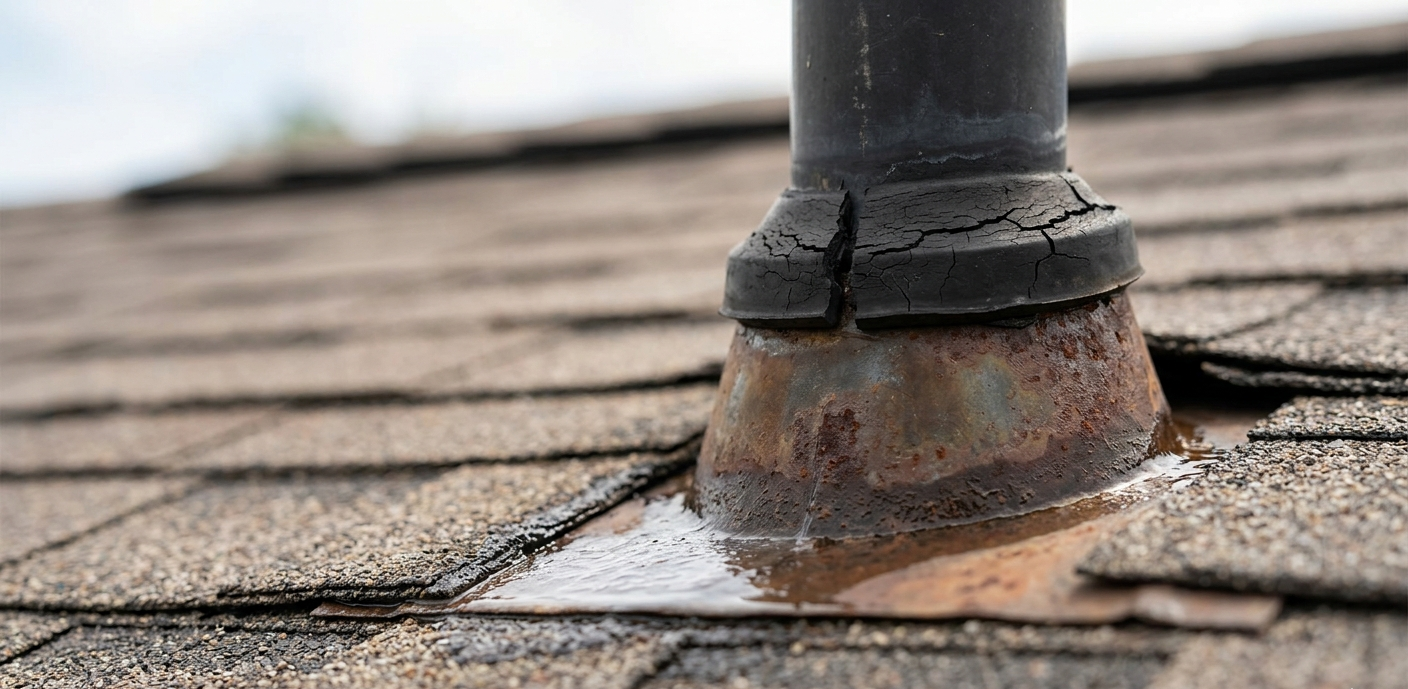
- Plumbing Boots are components that cover up vents that allow air into your plumbing system. Cheaper boots often fail within a few years, leading to leaks. High-quality metal boots are a lot more durable and provide better protection against long-term wear.
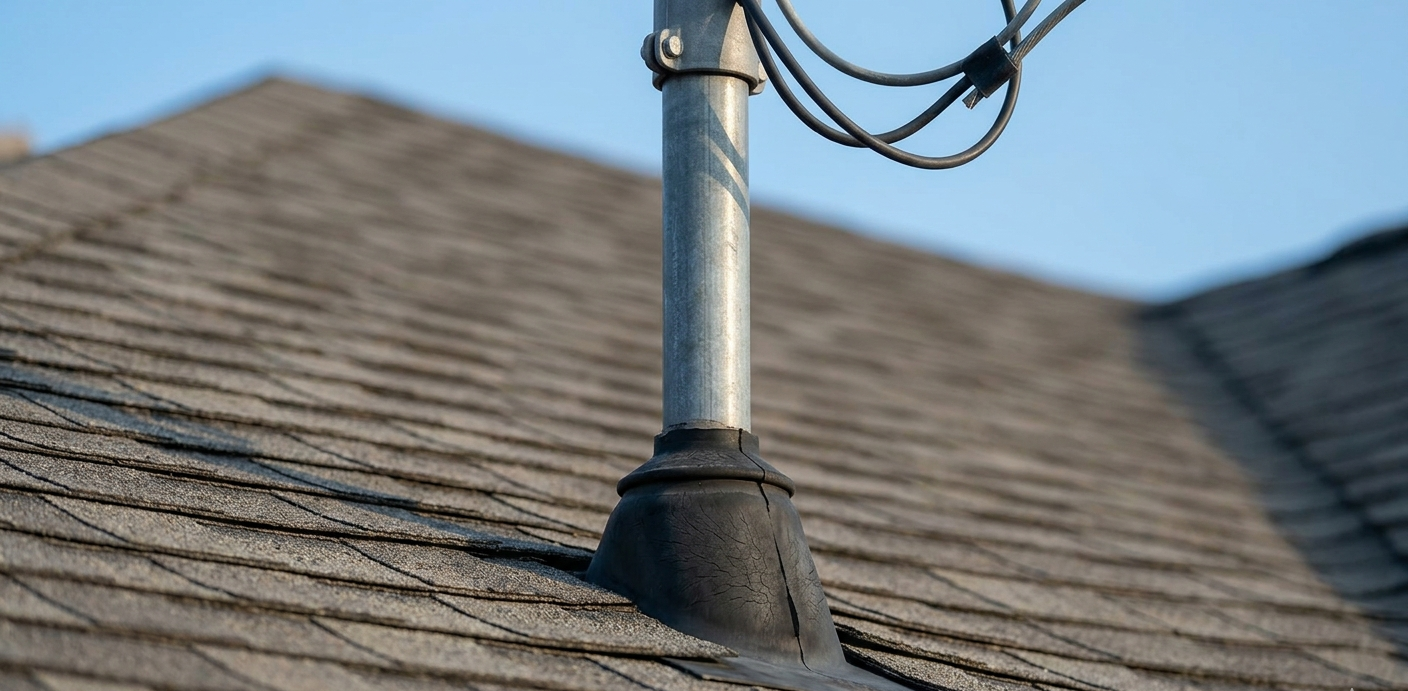
- Electrical Boots play a similar role, only they protect where your main electrical line enters your home from the roof. If this isn’t properly sealed, water will be able to enter your home, causing significant damage over time.
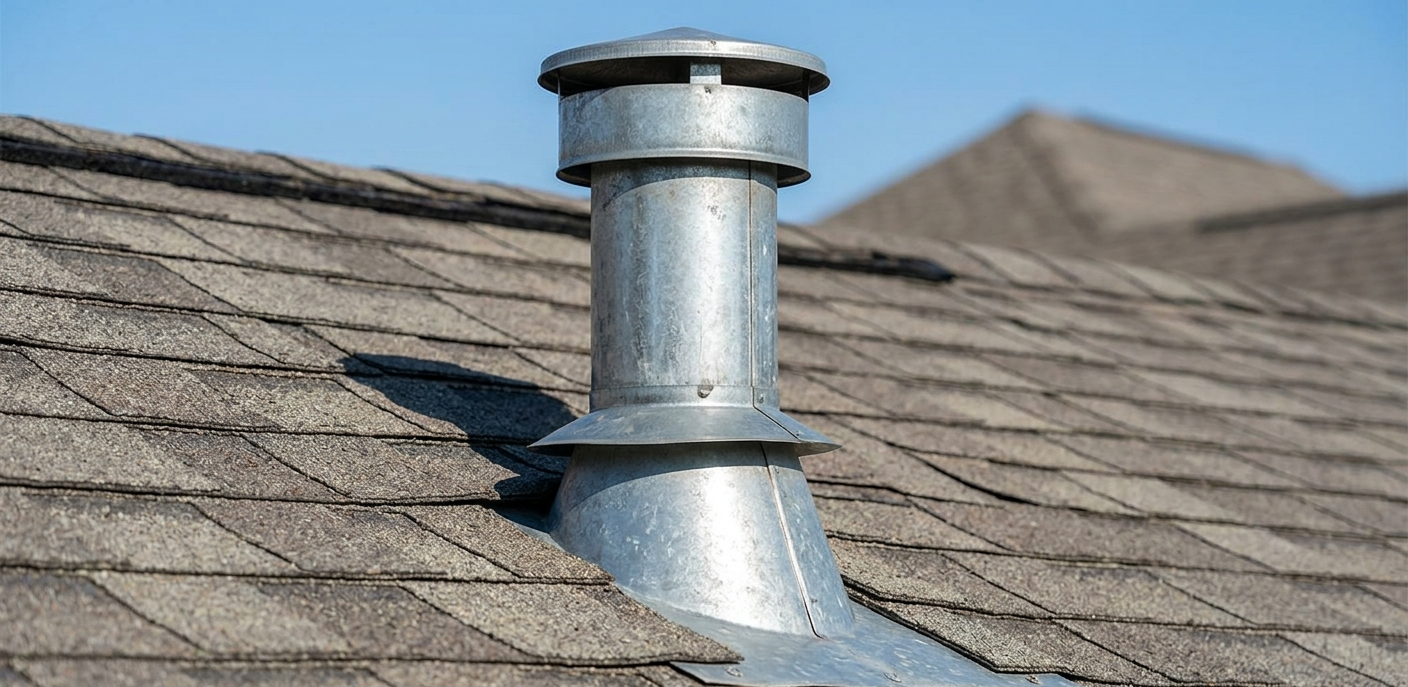
- B Vents let carbon monoxide exit the home safely and are installed by HVAC contractors. If improperly installed, water can leak around the vent, creating hidden but dangerous moisture issues.
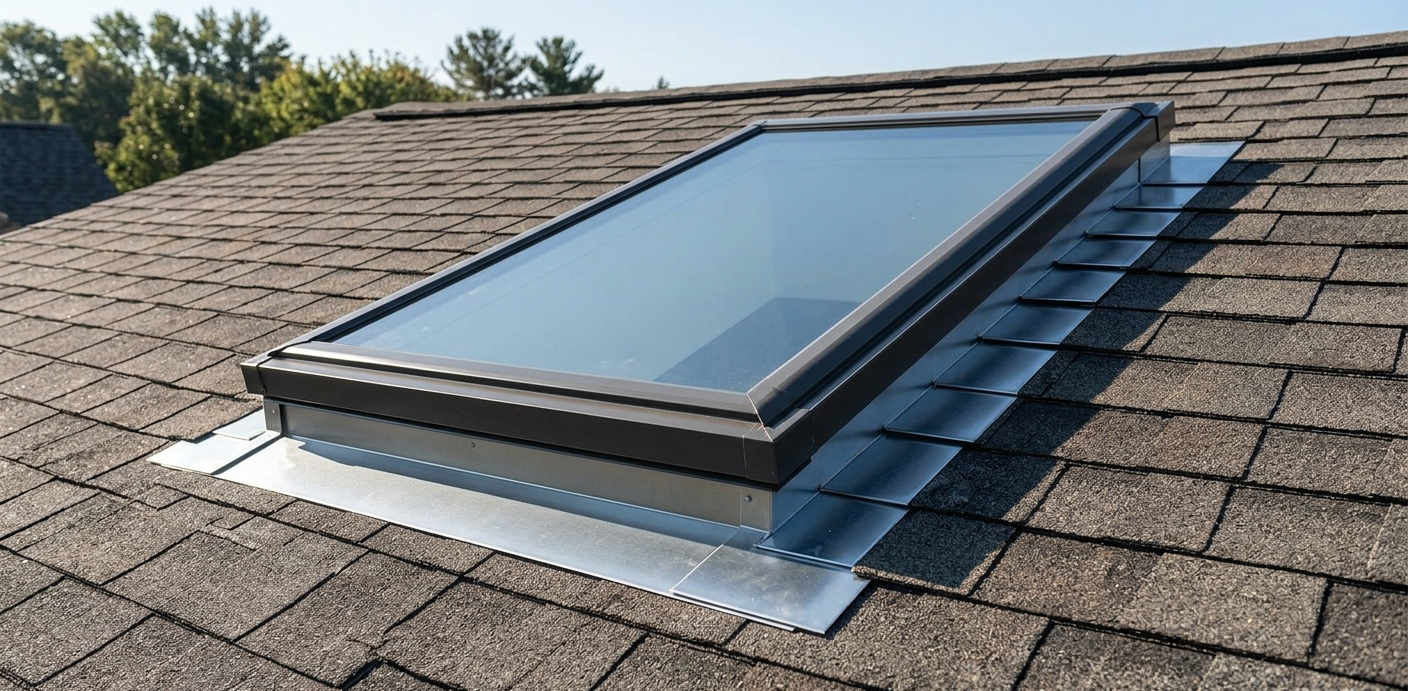
- Skylights introduce complexity to the roof, opening up new penetrations and joints that must be carefully sealed. If the skylight isn’t durable, or if the sealing deteriorates, new leak points could open up.
Joints and Seams
Leaks often occur at points where different roofing components meet or transition. We call these joints or seams. They require special attention because, particularly in climates like Texas, these areas are highly vulnerable to heavy rains. For a closer look at some of the following roofing terminology, you can read our Anatomy of a Roof guide.
- Roof Valleys are the place where two roof planes meet, forming a channel for water runoff. Without proper flashing and underlayment, water can easily seep through, leading to gradual structural damage.
- Eaves and Gutters at the edges of the roof channel water away from the structure. These areas are prone to drainage backups and ice dams that can cause water to pool, get under shingles, and leak into your home.
- Additions like dormers and skylights create complicated joints that require extra attention. Improperly sealed dormers are a frequent cause of interior water damage.
The Importance of Flashing
Flashing is a thin, usually metal material that directs water away from vulnerable areas such as joints, seams, and penetrations in the roof. Because it gets so much exposure to water, it’s typically made from tough materials, like galvanized steel or copper. Without proper flashing, water could pool, deteriorate, or otherwise seep into the home through these seams and openings.
A few of the major areas that need flashing are:
- Chimneys, to seal gaps where the roof covering meets the chimney.
- Skylights and Dormers which, as noted earlier, create new joints and seams.
- Walls and edges where they meet the roof covering.
- Roof Valleys, since they must be able to handle the brunt of water runoff.
Stop Leaks Before They Start
The best way to prevent leaks is through regular maintenance and inspections. Now that you know the major roof leak points, it’ll be easier to know what parts of the roof ought to be scrutinized. Shingles shouldn’t be damaged, gutters shouldn’t be clogged, flashing should be installed over all joints and seams, and penetrations should be carefully covered. A few small fixes today can avoid a lot of trouble in the future!
We’re Here to Help
Need an expert opinion? Don’t hesitate to contact the DFW Roofer team with your questions about choosing the right roof. Call us at (469) 751-4018 or schedule an appointment through our online appointment form.


