

We’ve already discussed the best type of roof for Texas weather, but a roof is a lot more than an asphalt, metal, or tile covering. It’s a system of interconnected parts. That’s why, in this guide, we’ll explore how roof weatherproofing components and accessories protect your home from the blistering summer heat, intense UV exposure, frequent rainstorms, heavy-hitting hailstorms, and strong winds. Consider this a companion to our Anatomy of a Roof glossary resource.
High Heat & UV Affects Roof Weatherproofing Too
Triple-digit days aren’t uncommon during Texas summers, and with high heat comes intense UV rays. Taken together, high heat and strong sunlight take a toll on the appearance and functionality of roofing materials. To offset this damage, a roof needs to be able to regulate its temperature and reflect harsh light. In turn, this helps regulate your home’s temperature, improving your energy bill and the longevity of your roof.
As discussed in our roofing material guide, a metal roof is one of the best options for Texas heat, since it can reflect sunlight and resist UV degradation that causes other materials to fade, warp, or crack—like lower-end asphalt shingles, which are more affordable, but also suffer from heat-related issues like blistering and cracking. But the type of roof covering you have is far from the full story. To protect your home from scorching summers, consider:
- Roof Vents: Your attic can become a trap for hot and humid air. Not only can this lead to mold and higher energy bills, but it can also accelerate roof deterioration. Roof ventilation helps regulate your attic temperature by letting fresh air circulate, which pushes out trapped heat and humidity—extending the life of your roof.
- Heat-Reflective Coatings: Roof coatings can reflect sunlight to reduce how much heat is absorbed by your roof in the first place. Used in tandem with a ventilation system, these components can mitigate a significant amount of heat damage and lower cooling costs, making them a smart investment for any home.
Heavy Rain Finds, Widens, and Drips into Openings
Texas gets plenty of wet weather, and your roof bears the brunt of it. To keep your property safe during rainstorms, a roof must shed water quickly to avoid pooling, leaks, and water damage, as well as drainage that water to a safe area to avoid damaging the foundation of your home. In our roofing material guide, we described how the smooth surface and mold resistance of metal and slate roofs make them a top choice for shedding water. Asphalt shingles can be effective in rainy conditions but require regular maintenance to avoid deterioration and leaks. But shedding water isn’t just about roof coverings:
- Leaf Guards: Clogged gutters can prevent water from flowing freely, leading to increased deterioration on your roof and around your foundation. Leaf guards or gutter protection systems solve this problem by keeping leaves, twigs, and other types of debris out of gutters, so rainwater can flow without clogging and backing up.
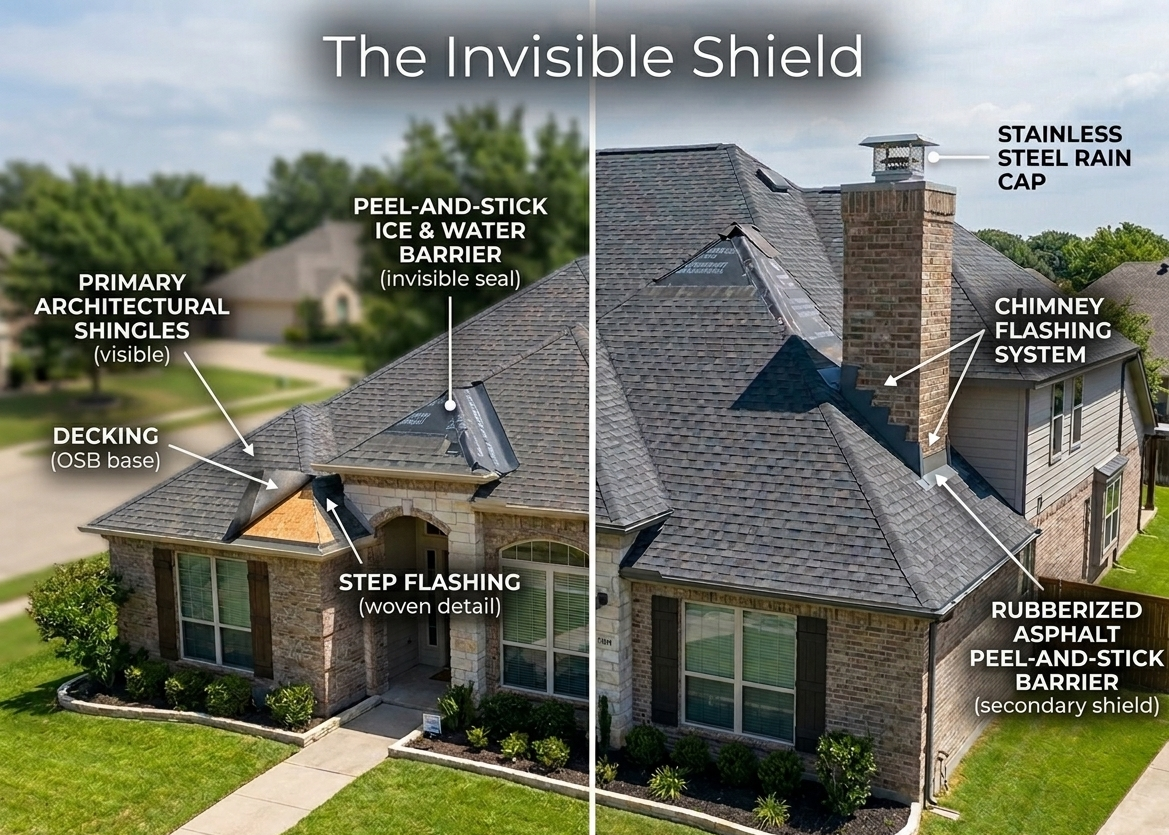
- Flashing: Flashing seals vulnerable areas where your roof meets with another component, such as around chimneys, vents, skylights, and valleys. Without proper flashing, these joints can become entry points for water, leading to leaks and water damage. Texas’ rainy seasons won’t be stopping any time soon, so it’s always smart to make sure your roof is properly sealed.
- Rain Caps: Rain caps, also known as chimney caps, keep rain, debris, and pests out of your chimney and other vents. They also prevent sparks or embers from escaping the chimney and potentially landing on your roof or nearby vegetation.
Hailstorms & Snow Wear, Tear, and Expand
Texas hailstorms are a major threat to your property. Whether you’re left with small dents or big punctures, minimizing hail damage is essential to maintaining the longevity of your roof—and protecting everything below it. Of course, tough materials like metal and slate rank among the most durable options for hail resistance, but asphalt shingles will sustain more damage over time without frequent maintenance. But even if your roof covering is compromised, there are components underneath that can mitigate further damage:
- Underlayment is a protective layer that sits right beneath your roof covering. It’s an extra line of defense against water infiltration in the event that your roof covering is damaged, such as by a hailstorm. Sometimes, underlayment is installed with staples, which can become leak points. That’s why peel-and-stick varieties are ideal for climates like Texas, where you can expect plenty of hail, snow, and rain.
- Decking is the wooden base right beneath the underlayment. It’s the part of your roof that prevents sagging and reinforces the roof cover. You can imagine the role this might play during impacts, such as from hail. Choosing a strong decking material, such as OSB (Oriented Strand Board) rather than plywood, can improve your roof’s impact resistance.
Wind Surges Lift and Remove Shingles and Flashing
Strong winds are another big threat in Texas. When a big surge of wind hits your property, it can lift your roof or damage and detach your roof covering, which can lead to further complications as more vulnerable parts of your roof are exposed. To prevent lifting, a heavier and stronger roof covering is a good first step. Asphalt shingles can handle moderate winds, but metal and slate roofing is ideal for wind resistance. Still, when a big gust of wind comes your way, you’ll rest easier if you’ve invested in additional weatherproofing components:
- Hurricane Clips and Straps fasten your roof’s trusses or rafters to the walls of your home, preventing the roof from lifting during high winds. Even if you don’t live in a hurricane-prone region, these clips are a great investment to improve the longevity of your roof and secure it during unexpectedly strong windstorms.
- Vents aren’t just about regulating temperature and humidity levels in your attic. They also prevent wind uplift. Because vents allow air to flow through the attic, they can also reduce the pressure put on your roof by strong winds by dissipating some of it through ventilation.
We’re Here to Help
Need an expert opinion on roof weatherproofing? Don’t hesitate to contact the DFW Roofer team with your questions about choosing the right roof. Call us at (469) 751-4018 or schedule an appointment through our online appointment form.


